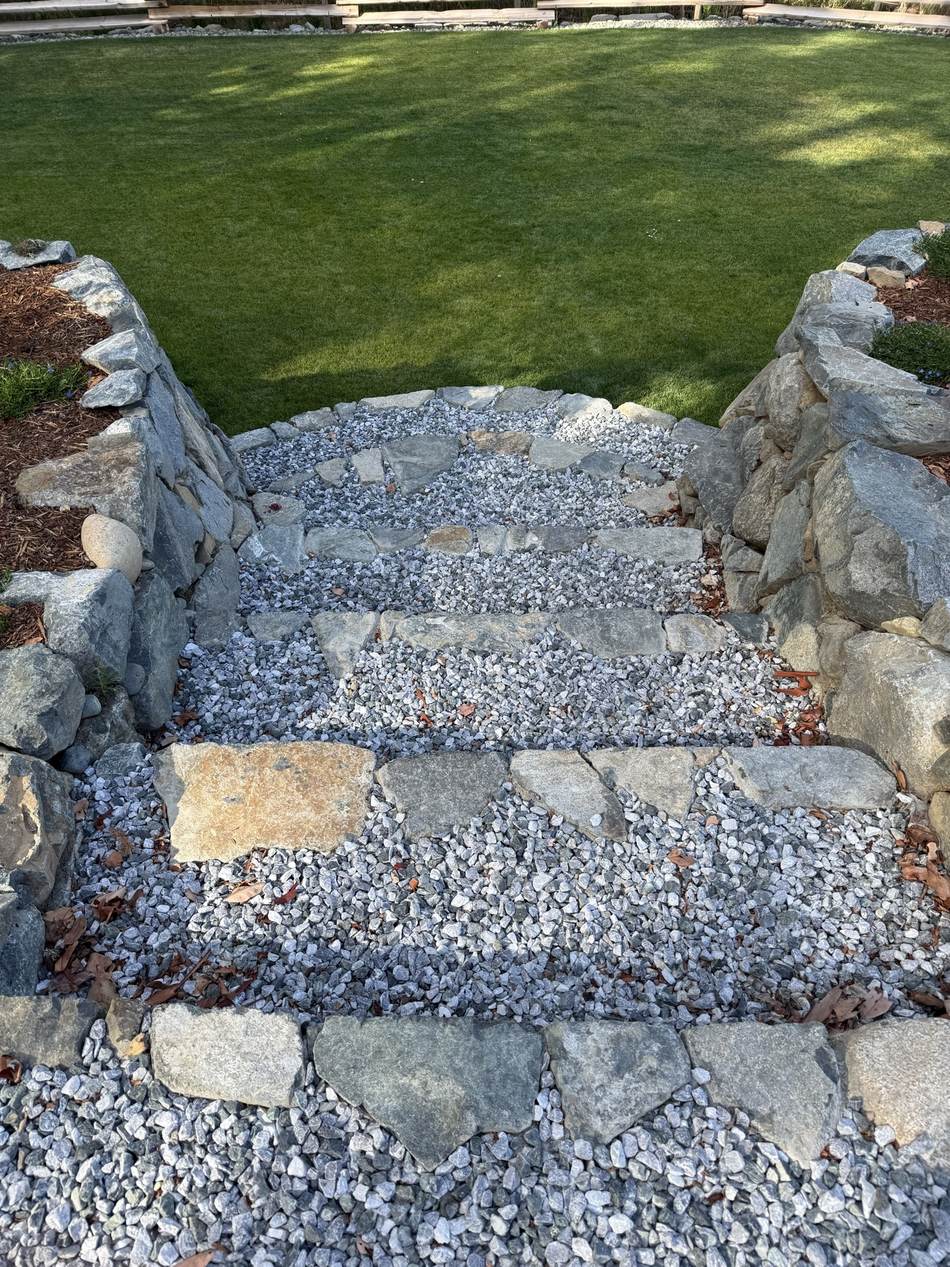
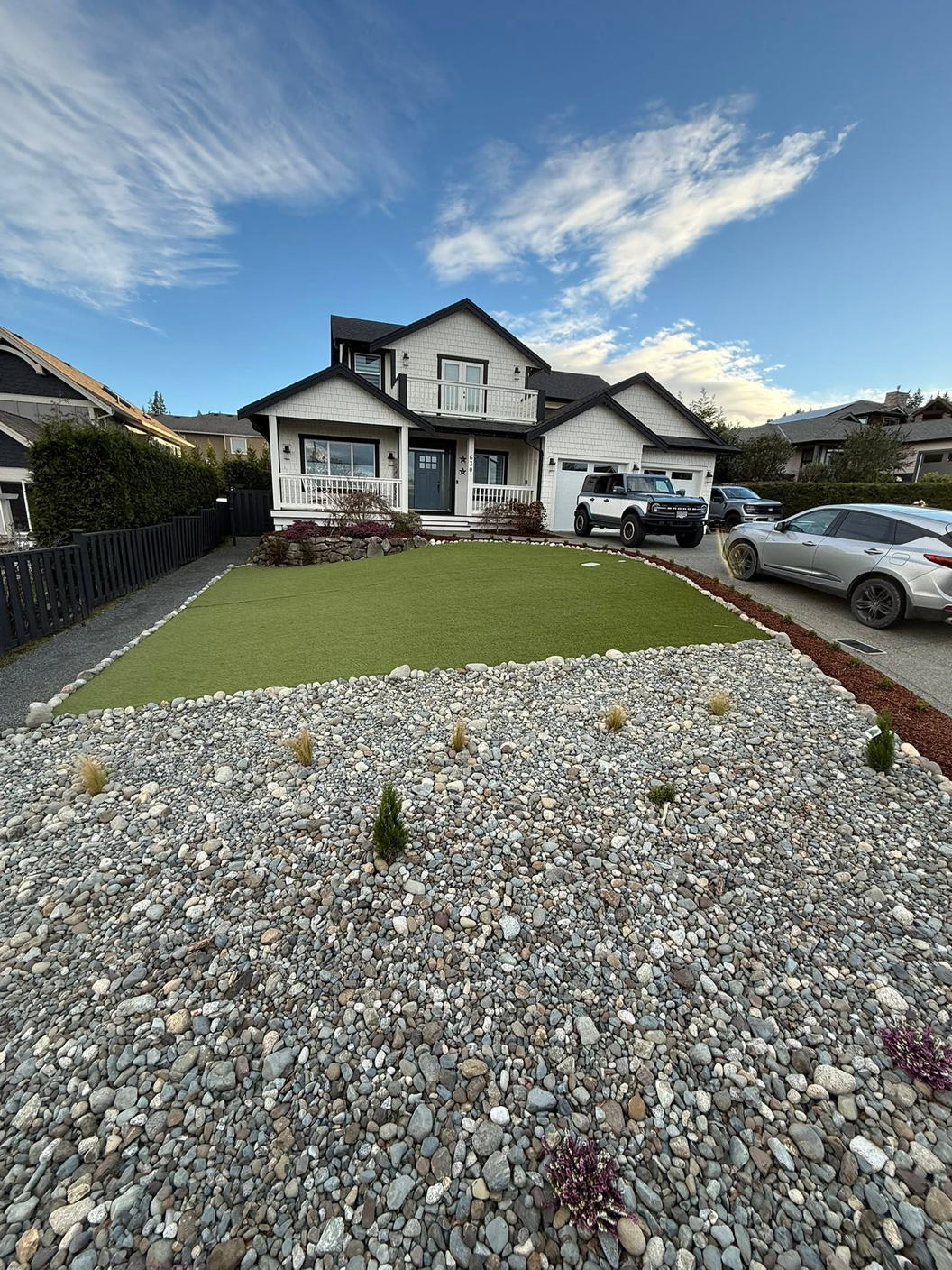
Gravel & Crushed Rock Driveways
The practical choice for longer rural driveways. Built with a compacted sub base and a crushed top course that locks together, crowned so water runs off the sides rather than pooling in the tracks.
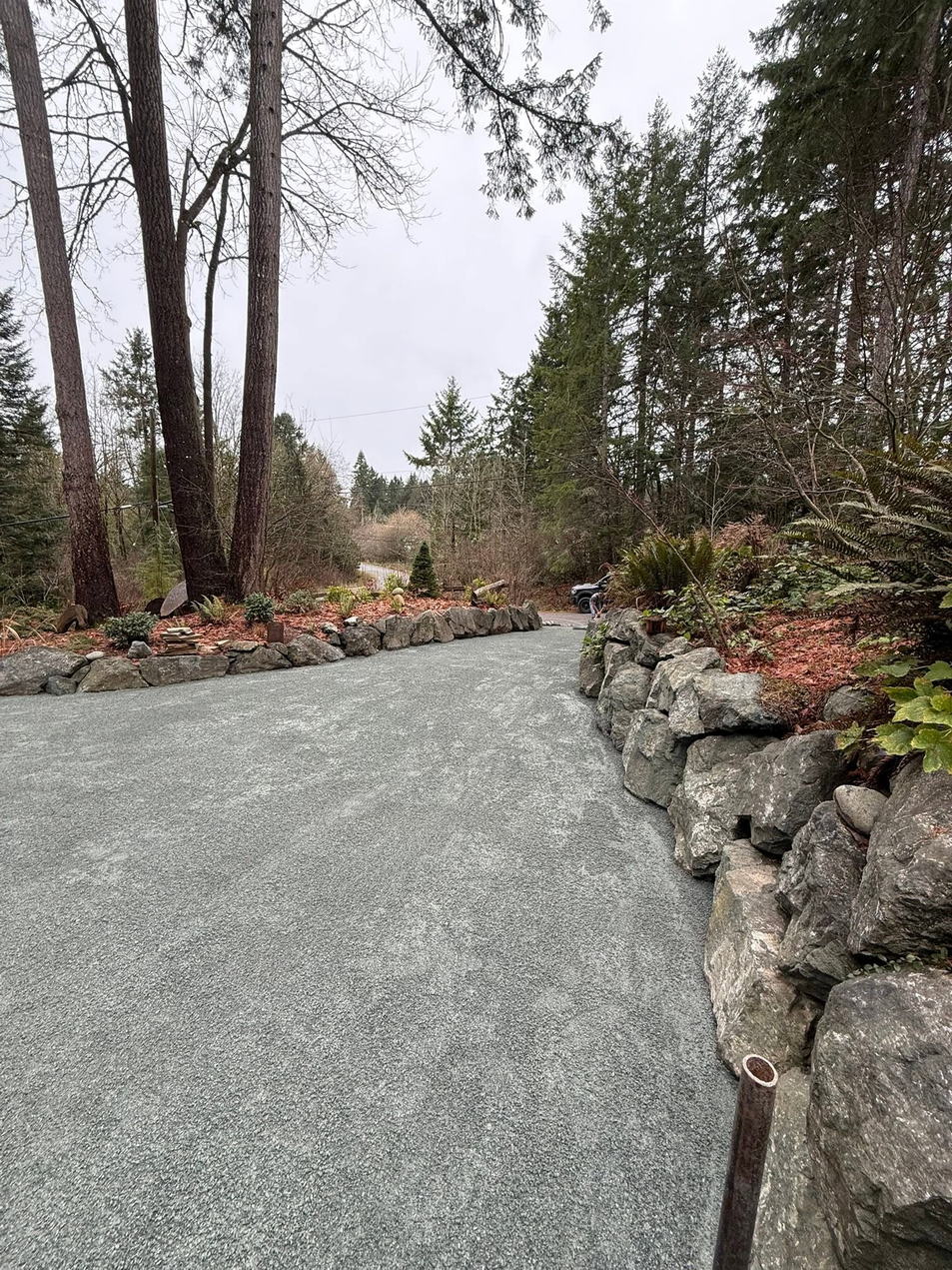
Gravel and paving stone driveways built on a sub base that carries real weight, with the crown and the drainage sorted so they do not rut or pothole.
Send a few details and we will get back to you to book a site visit. Photos of the space help, and so does anything you already know about your budget.
A driveway carries more weight than anything else on the property, and on a rural South Island lot it often carries it over ground that holds water half the year. That is why driveway failures are so predictable: ruts down the wheel tracks, potholes at the low end, and a soft spot that gets worse every winter.
All of it comes back to the same two things. The sub base was not deep enough or compacted properly, and the water had nowhere to go. We build gravel driveways and paving stone driveways, and the part underneath is the same either way.
We excavate to depth, deal with soft sub grade rather than bridging over it, build the sub base up in compacted lifts, and shape a crown so water sheds off the surface instead of soaking through it. Culverts, ditching and swales go in where the site needs them.
We strip the driveway to sub grade and look at what is actually under it. Soft, wet or organic ground gets excavated out or stabilised with geotextile and extra depth. Building over a soft spot guarantees a rut in the same place within a year or two.
The sub base goes in and gets compacted in lifts. Depth depends on the ground and on what will use the driveway, because a driveway that sees a loaded truck or an RV needs more than one that sees two cars.
Then the surface. Crushed gravel gets placed and compacted with a crown so water sheds to the shoulders, or the base gets screeded and driveway grade pavers are laid and locked in over it. Drainage, culverts and ditching are part of the build, not an afterthought when it fails.
The practical choice for longer rural driveways. Built with a compacted sub base and a crushed top course that locks together, crowned so water runs off the sides rather than pooling in the tracks.
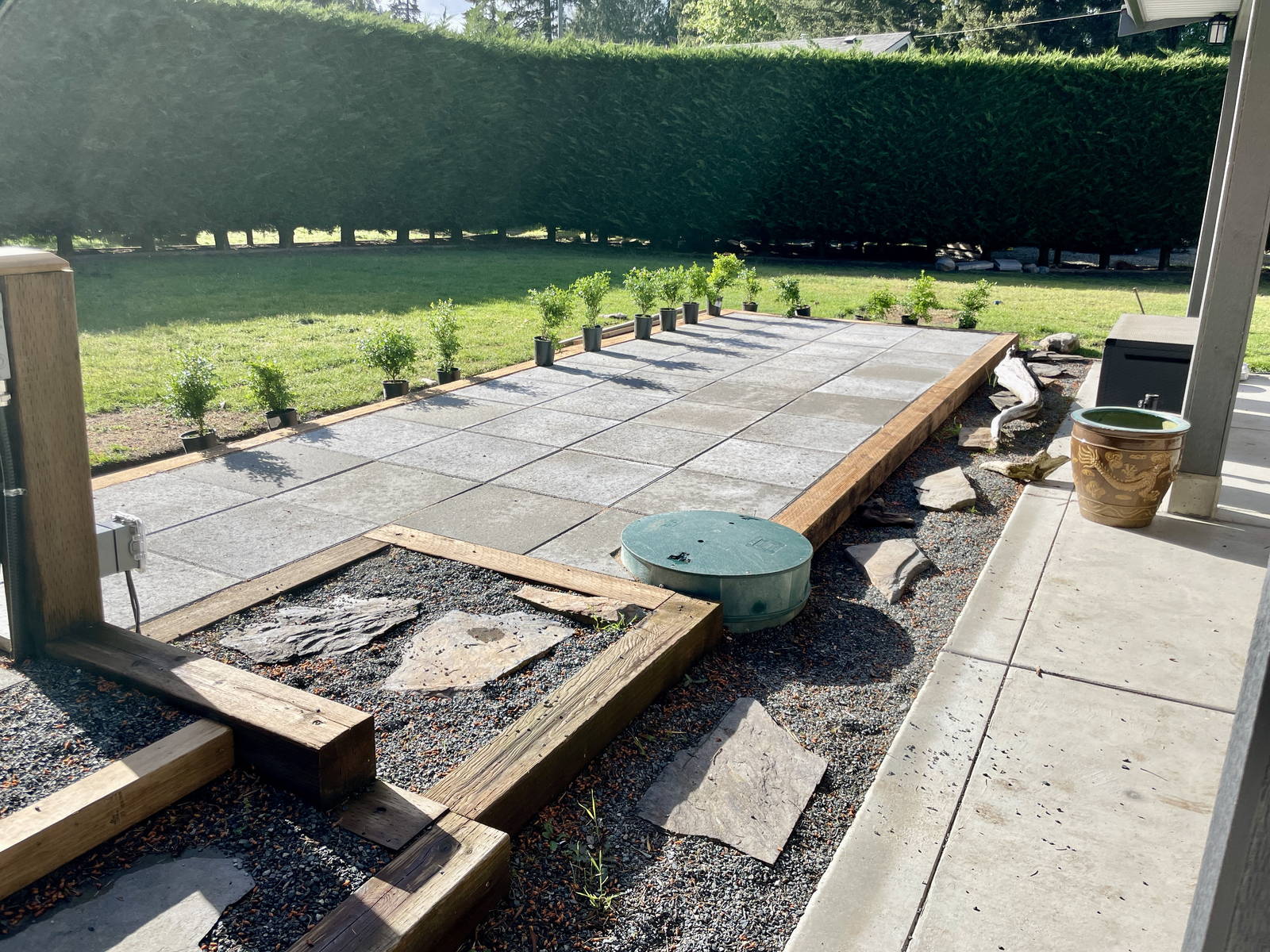
Driveway grade pavers on a deeper base, for when the driveway is part of the look of the house. Individual stones can be lifted and reset rather than patched.
Driveway widening, extensions, turnarounds and second vehicle bays, built to the same depth and compaction as the original so the join does not settle into a ridge.
Rutted, potholed or sunken driveways brought back to grade, with the drainage cause dealt with so the same failure does not come back next winter.
Gravel costs less up front, suits long rural driveways, and can be topped up and regraded over time, but it needs occasional maintenance and can rut without a good crown. Paving stone costs more up front and gives a finished surface at the house, and a single stone can be lifted and reset instead of the whole area being patched. Both need the same sub base underneath, so that is not the place the two differ.
It depends entirely on the ground underneath and the weight it will carry. Wet clay under a driveway that sees loaded trucks needs a great deal more depth than firm, free draining ground under two cars. We assess the sub grade on site and tell you what depth the driveway actually needs rather than quoting a standard number.
Almost always water plus insufficient base. If the driveway is flat rather than crowned, water sits on it, works into the base and softens it, and traffic pushes ruts into the soft spots. Topping it up with fresh gravel without fixing the crown and the drainage buys you one season.
Yes. Widening for a second vehicle, adding a parking pad or building a turnaround are common jobs. The new section is built to the same depth and compaction as the old one should have been, and we tie the grades together so water still runs off properly.