Paving Stone Patios
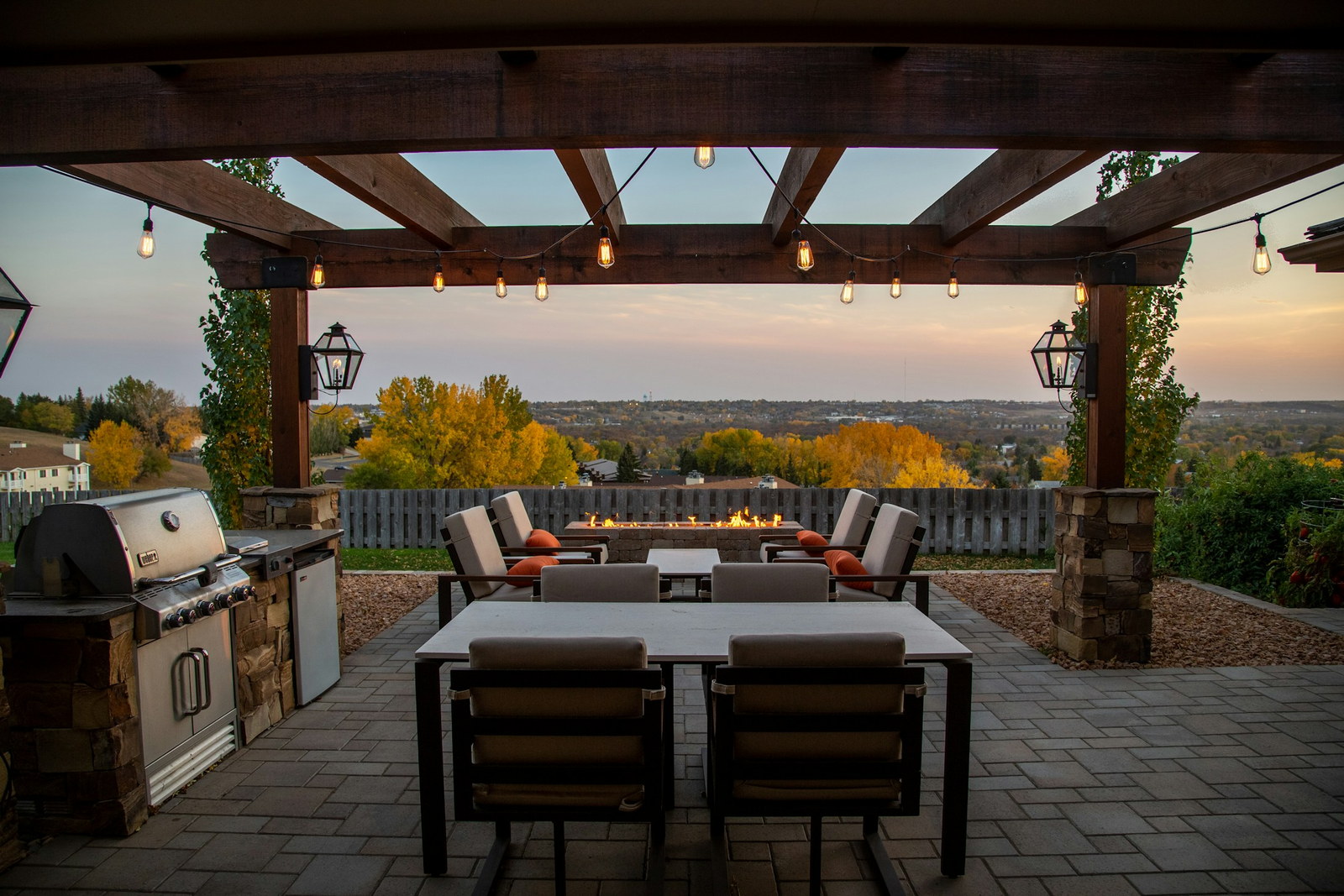
Interlocking pavers in the pattern, colour and format you want, set on a compacted base with proper edge restraint so the outside courses do not creep outward over time.
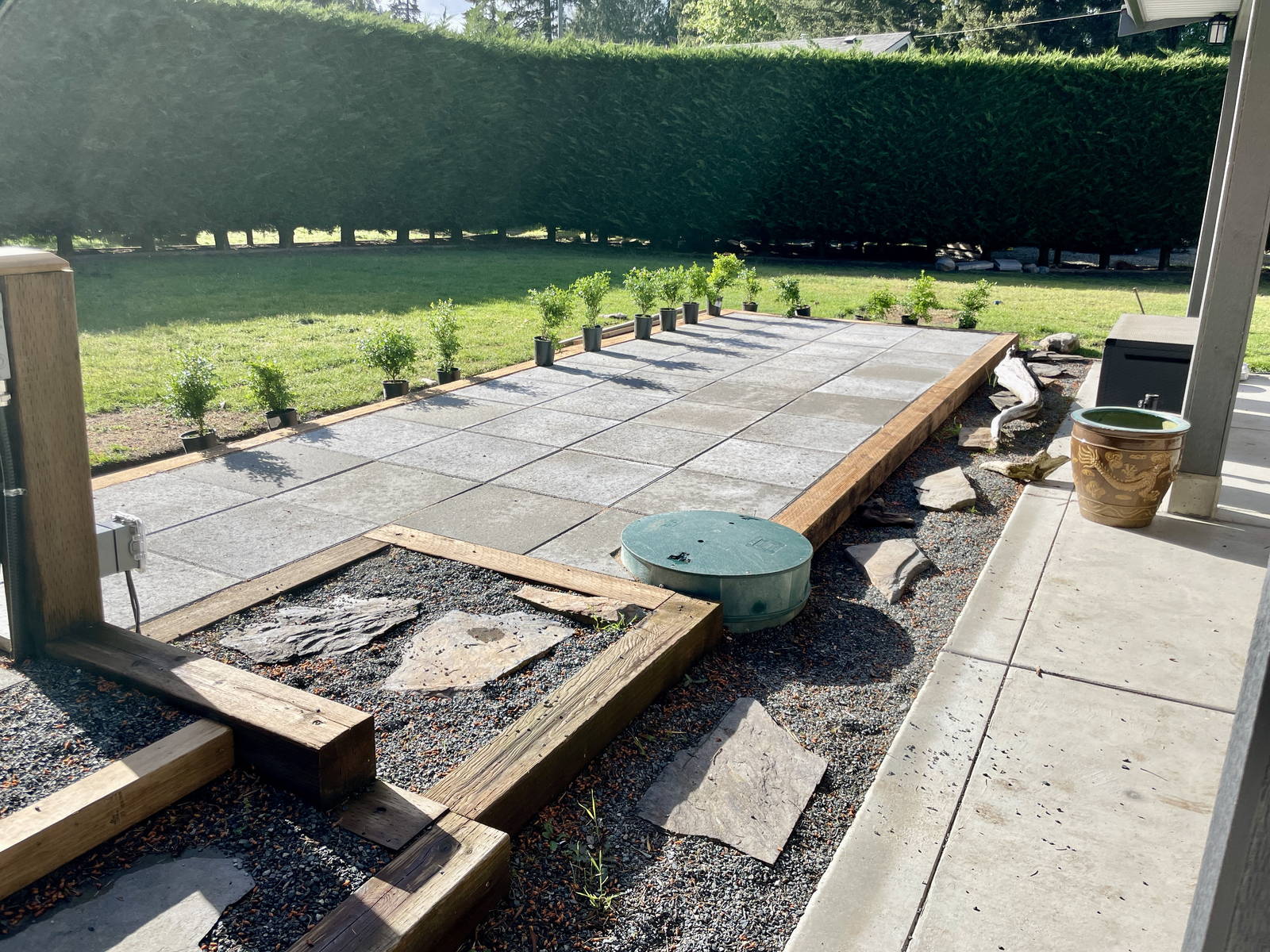
Paving stone patios, walkways and garden paths. Compacted base, clean cuts and tight joints, so the surface still sits flat years after we leave.
Send a few details and we will get back to you to book a site visit. Photos of the space help, and so does anything you already know about your budget.
A paver patio is only as good as what is underneath it. Sunken corners, rocking stones and joints that open up every spring are almost never a paver problem. They are a base problem, and by the time they show, the base is buried.
We build paving stone patios, walkways, garden paths and large format slab surfaces the same way every time: excavated to depth, sub base compacted in lifts, screeded bedding, then the stone set tight with cuts made properly rather than forced.
Paving stones also have a real advantage over poured concrete on this coast. They flex slightly with ground movement instead of cracking, and if a section ever needs to come up for a service line or a repair, it goes back down without a patch showing.
We excavate to the depth the surface needs, which depends on what is going on top and what the ground underneath is doing. Soft or wet sub grade gets dealt with at this point, with geotextile or extra depth, rather than being covered over and hoped about.
The sub base goes in and gets compacted in lifts, because one deep lift compacts on the surface and stays loose underneath. Then the bedding layer gets screeded flat and even.
Stone gets set tight, cuts get made with a saw rather than forced, and the perimeter gets a proper edge restraint. Joints get filled, the surface gets compacted in, and the site gets swept and cleaned before we leave.
Interlocking pavers in the pattern, colour and format you want, set on a compacted base with proper edge restraint so the outside courses do not creep outward over time.
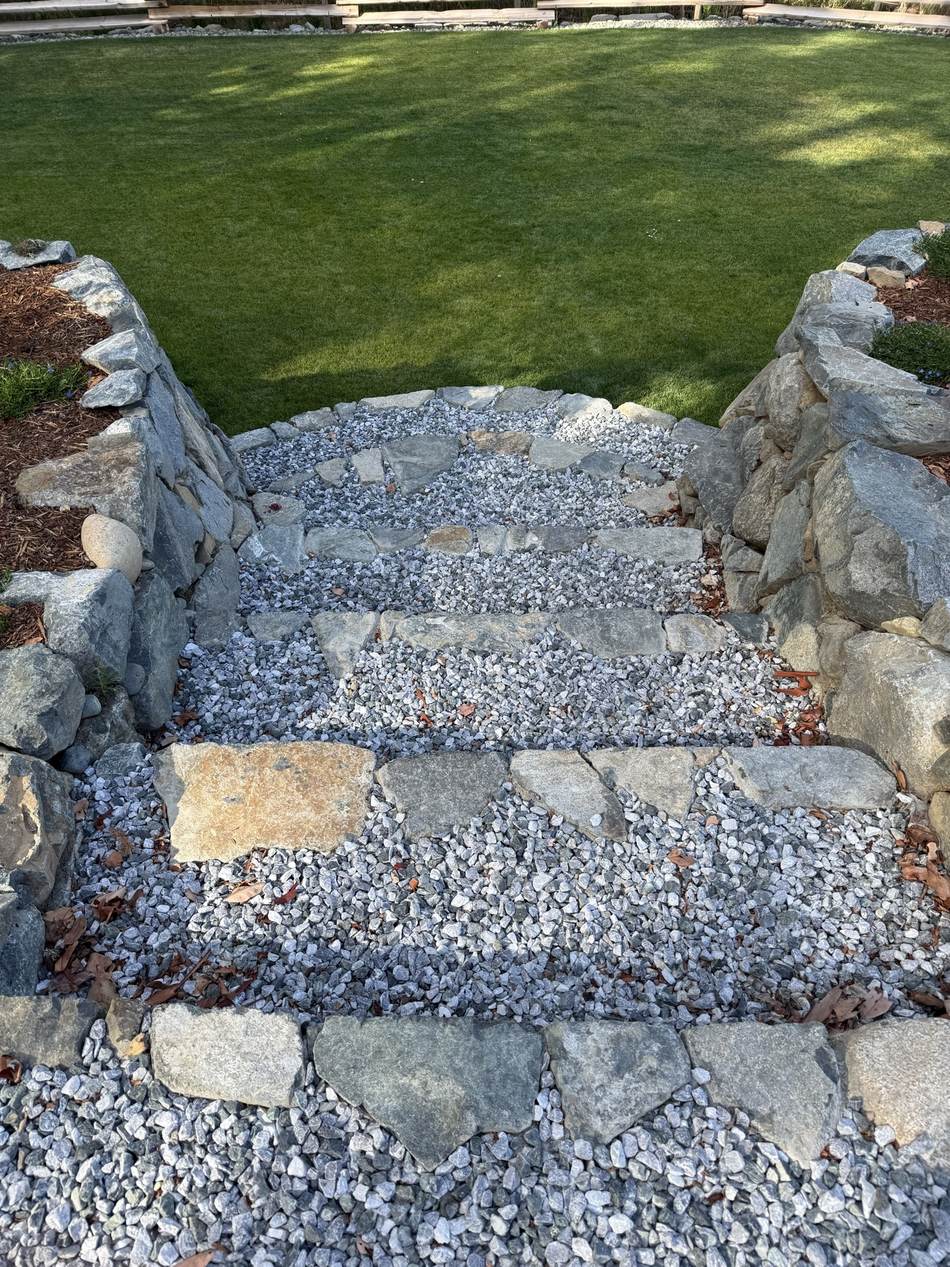
Front walks, side yard paths and stepping stone runs, laid to a comfortable width and a consistent grade so they shed water and stay clear in winter.
Big clean slabs with tight joints for a modern look. They are less forgiving than small pavers, so the screed and the base have to be right.
Steps built into the hardscape at a consistent rise and run, with landings sized so the route through the yard actually works.
For most residential patios and walkways on this coast, yes. Pavers flex with ground movement instead of cracking, individual stones can be lifted and reset if a service line needs access, and the finished look is easier to match to the house. Poured concrete is still the right answer for some applications, and we will say so if it is.
Nearly always because the base was too shallow, was not compacted in lifts, or the drainage under it was never addressed. Edge restraint matters too, because without it the outer courses gradually spread and the joints open. It is a base problem, not a stone problem.
It is a jointing sand that sets firm once it is wetted in, so it resists weeds, ants and washout far better than plain sand. On most patios and walkways it is worth it. On some stone types and joint widths it is not suitable, and we will tell you which applies.
A modest walkway can be a couple of days. A large patio with steps, edging and cutting around existing features takes longer, and excavation always has the potential for surprises underground. You get a realistic window before we start.